Why Coding Is the Third Language
Your kid already has an edge: they speak two languages. Bilingual children develop stronger problem-solving skills, better pattern recognition, and enhanced cognitive flexibility. These are the exact same skills that make great programmers.
Robot kits turn abstract coding concepts into tangible, physical outcomes. Write a command, watch the robot move. Debug an error, see the behavior change. It's the fastest path from "I don't get coding" to "I built that."
Choosing by Age Group
Ages 6-8: Block Coding Starters
What they learn: Sequencing, loops, basic logic Interface: Drag-and-drop visual blocks (similar to ScratchJr) Build time: 15-30 minutes assembly Session length: 20-30 minutes (attention span appropriate)
What to look for:
- Large, colorful pieces that snap together easily
- Tablet or phone app with visual block coding
- No reading required for basic programming
- Bilingual voice prompts (not just text)
Avoid: Kits that require soldering, tiny screws, or text-based coding at this age.
Ages 9-12: Intermediate Builders
What they learn: Variables, conditionals, functions, basic sensor programming Interface: Scratch-style visual coding with text code preview Build time: 1-3 hours assembly (multiple configurations) Session length: 30-60 minutes
What to look for:
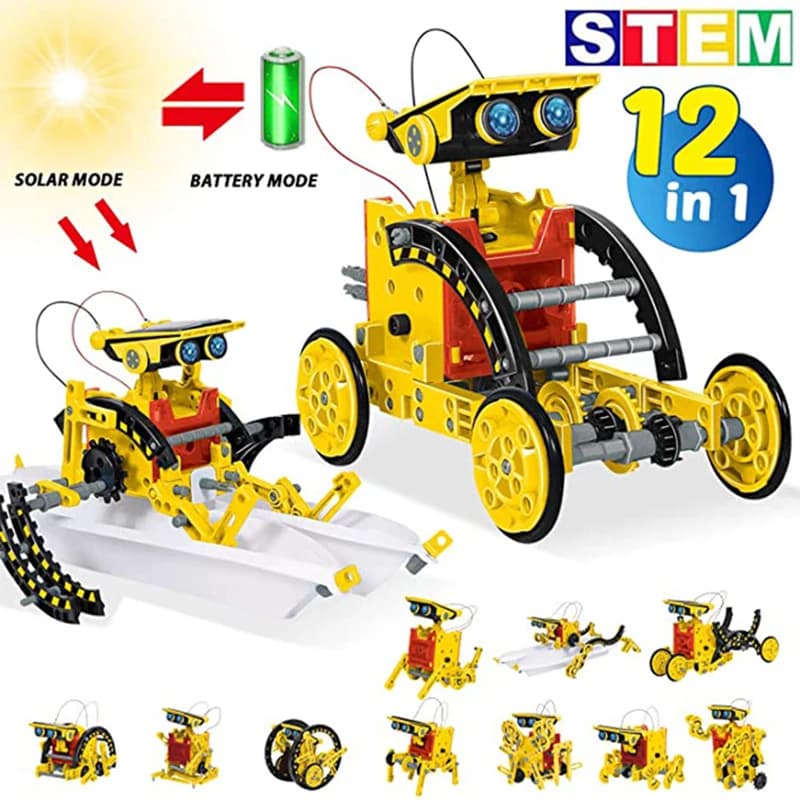
- Modular designs with multiple build options (car, crane, walker)
- Sensor add-ons (ultrasonic, infrared, light)
- Transition mode that shows block code alongside Python equivalent
- Community project library for inspiration
- Bilingual instruction manual and app
Sweet spot: This is where bilingual kits shine. Kids at this age can read instructions in both languages, reinforcing vocabulary in both English and Spanish while learning coding concepts.
Ages 13-16: Advanced Makers
What they learn: Python, C++, Arduino, electronics fundamentals Interface: Full text-based IDE (Thonny, Arduino IDE, or proprietary) Build time: 3-8 hours (complex mechanical and electronic assembly) Session length: 60-120 minutes
What to look for:
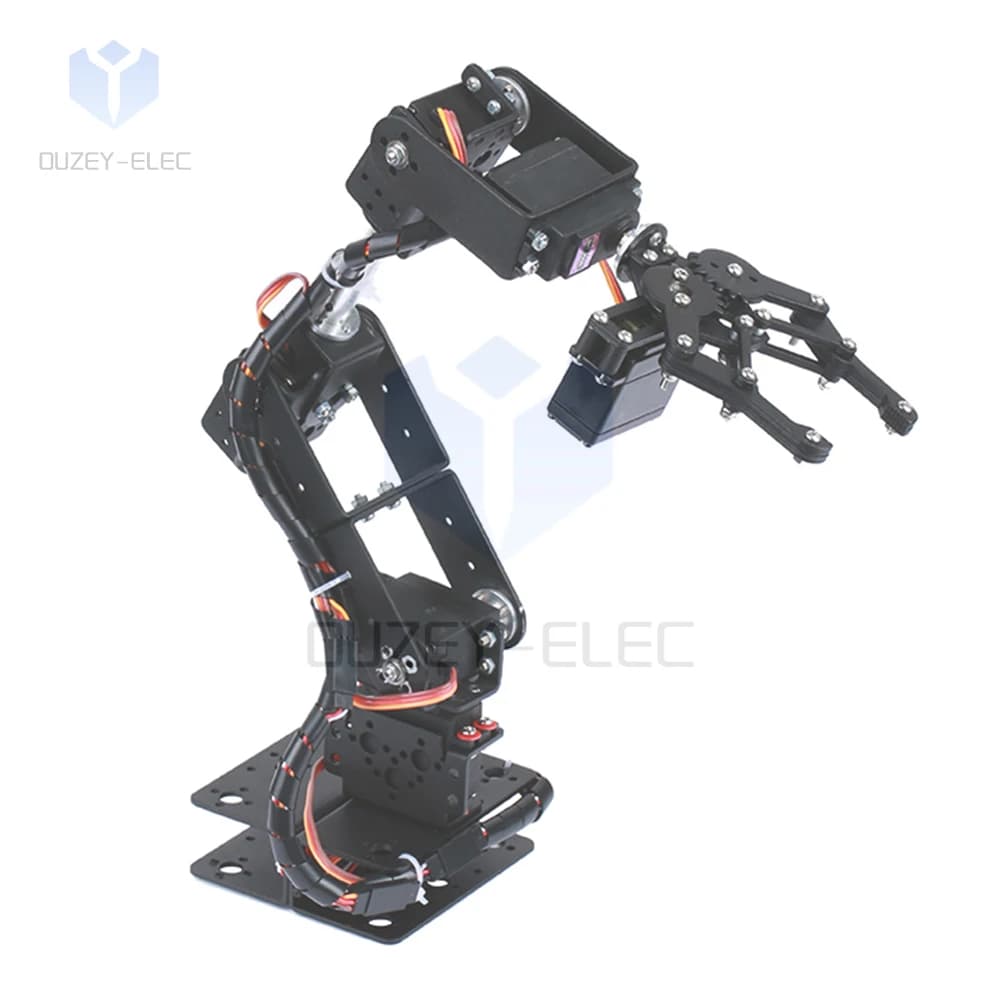
- Arduino or Raspberry Pi based (real hardware, not proprietary)
- Full Python/C++ programming (not simplified versions)
- Expandable with third-party sensors and motors
- Documentation in multiple languages
- Active community forums for troubleshooting
The Bilingual Advantage in STEM
Research from the University of Puerto Rico (2024) found that bilingual students who learn coding concepts in both languages show:
- 23% faster concept retention compared to monolingual learners
- Higher debugging persistence — bilingual students try 2.5x more solutions before asking for help
- Better variable naming — exposure to multiple languages creates more descriptive, readable code
This isn't surprising. Bilingual brains are already trained to switch between rule systems (grammar, vocabulary, syntax). Programming is just another rule system.
What Makes a Kit "Bilingual"
Not all kits that claim bilingual support deliver equally. Here's the spectrum:
Level 1: Translated Manual Only
The instruction booklet comes in Spanish. The app, coding interface, and tutorials remain English-only. This is the minimum — helpful for assembly, but doesn't support bilingual learning during the coding phase.
Level 2: Bilingual App Interface
The coding app switches between English and Spanish. Block names, error messages, and tutorials display in the selected language. This is significantly more useful for bilingual learning.
Level 3: Full Bilingual Curriculum
Assembly instructions, coding interface, tutorial videos, and lesson plans all available in both languages. Some kits include bilingual voice prompts and vocabulary building exercises that connect coding terms to both languages.
Our recommendation: Level 2 minimum. Level 3 if available and budget allows.
Budget Guide
| Level | Price Range | What You Get |
|---|---|---|
| Starter (ages 6-8) | $30-80 | Pre-built robot, block coding app, 5-10 activities |
| Intermediate (ages 9-12) | $80-200 | Build-it-yourself, 20+ activities, sensor pack, app |
| Advanced (ages 13+) | $150-400 | Arduino/RPi based, full programming, expandable |
Pro tip: Start one level below where you think your kid should be. Confidence matters more than challenge at the beginning. A kid who masters a "too easy" kit in 2 weeks will eagerly ask for the next level. A kid who struggles with a "too hard" kit for 2 months may lose interest entirely.
Expandability: The Hidden Value
The best kits grow with your child. Look for:
- Add-on sensor packs — $20-40 each, add new capabilities without buying a new base kit
- Multiple build configurations — 3-in-1 or 5-in-1 kits offer weeks of variety from one purchase
- Community project libraries — Free projects shared by other users extend the kit's lifespan
- Compatible with standard parts — Kits that use standard servo motors, Arduino shields, or LEGO-compatible connectors stay useful longer
A $50 starter kit that expands to $200 over 2 years beats a $200 kit your child outgrows in 6 months.
Setting Up for Success
Create a dedicated workspace
A small desk or table where the robot project stays assembled between sessions. Tropical homes with limited space can use a sturdy tray that slides under a bed.
Schedule regular sessions
15-30 minutes, 3x per week beats a single 2-hour marathon on Saturday. Consistency builds skills faster than intensity.
Let them fail
Debugging is where learning happens. Resist the urge to fix their code. Ask questions instead: "What did you expect to happen?" and "What actually happened?"
Connect to real life
"That's the same sensor the pool robot uses to detect walls." Real-world connections between their robot kit and the automation around them make coding feel relevant, not abstract.
Bottom Line
Pick a kit matched to your child's age, start one level below their ability, and prioritize bilingual app support over translated manuals alone. The goal isn't to create a programmer — it's to give your bilingual kid a third language that opens doors regardless of what career they choose.
Frequently Asked Questions
Quick answers to common questions about this topic.
Ages 6-8 can start with block coding kits (drag-and-drop). Ages 9-12 transition to simplified Python. Ages 13+ can handle full Python and Arduino projects.
Select kits include bilingual manuals and app interfaces. We prioritize stocking options with English and Spanish support for Hispanic-American families.
Yes — most kits align with NGSS science standards and include structured lesson plans. One kit covers 20-40 hours of STEM instruction.
Beginners use visual block coding (like Scratch). Intermediate kits teach Python basics. Advanced kits cover full Python, C++, and Arduino programming.
Shop Stem Robots